






Why Don't Dental Patients Come Back?
- The most common reasons are that the patient wants the treatment but feels unsure about the cost.
- They need time to think it over, or have questions they didn't feel comfortable asking during the consultation.
- For some patients, the treatment is not easy to afford or has too many steps to follow.
The key to overcome this is to understand what’s getting in the way. Once you know why patients hesitate, you can make the journey from consultation to treatment much easier. Moreover, you can improve treatment acceptance along the way.
According to a Levin Group Practice Survey, two thirds of the U.S. dental practices have a 20% to 30% case acceptance rate. This is significantly below the commonly cited 90% benchmark.
So, why do dental patients come back?
Let's explore the reasons behind treatment plan abandonment and what you can do to improve case acceptance.
Why Do Patients Ghost After a Dental Consultation?
Understanding what is holding patients back can help your practice respond in a more helpful way. Moreover, it makes it easier for interested patients to move forward.
1. The Treatment Cost Feels Too High
Cost is one of the biggest reasons dental patients hesitate after receiving a treatment plan. The total amount may be higher than they expected, especially if they weren't prepared for the cost before the consultation. If there is no clear way to manage the cost, postponing the treatment can feel like the easiest choice.
2. They Need Time to Make a Decision
Not every patient will be ready to make a decision immediately after a consultation. Some treatments involve a significant financial commitment. Moreover, some require patients to think about the timing, recovery, or expected results with a spouse, family members, or someone else.
3. Payments or Financing Options Aren't Clear
A patient may be ready for treatment but not have the ability or willingness to pay the full amount upfront. Moreover, when payment or financing options aren't explained clearly, they may assume the treatment is simply out of reach. Complicated financing processes can create another barrier. Patients may not know which options they qualify for, how payments work, or what their monthly commitment could look like.
4. The Follow-Up Process Is Too Slow or Generic
Most patients leave the consultation interested but still have questions. However, the situation worsens when patients do not receive any call backs. As a result, the initial interest can fade. Additionally, a universal message like “Just checking in” may not encourage the patient enough.
5. The Patient Has Questions They Didn't Ask During the Consultation
Patients don't always ask many questions during a consultation. They may think of concerns later about the cost, recovery, treatment timeline, or insurance. They may also wonder what could happen if they wait. Ultimately, these unanswered questions can lead to building hesitation.
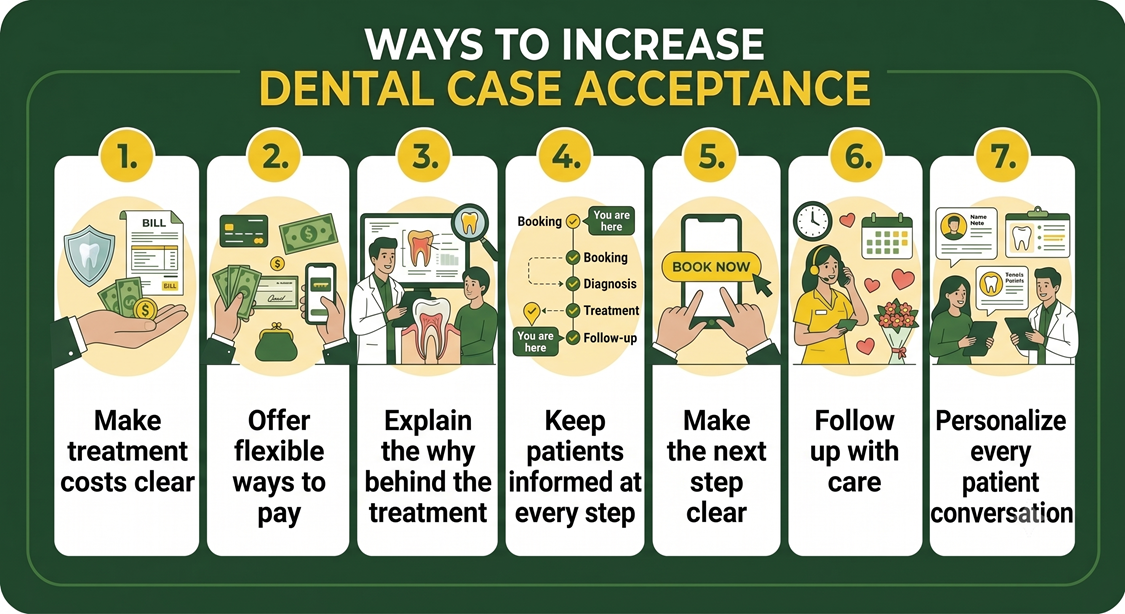
How to Boost Dental Case Acceptance Rate?
43% of patients never return after their first consultation. That is where you must make small changes in how you present treatment, discuss costs, and follow up can help improve case acceptance for dental practices.
1. Make Treatment Costs Clear
Patients shouldn't have to guess what their treatment will cost. Explain the total cost upfront and clearly outline what is included. If there are different stages or additional costs, explain those as well.
Being transparent helps patients know what to expect and reduces unpleasant surprises later. It also gives them the information they need to make a confident decision.
2. Give Patients More Than One Way to Pay
For some patients, the treatment isn't the problem, the upfront cost is. During this situation, give them payment choices that fit different financial situations, such as paying in full, financing, or flexible payment plans.
When patients can see their options clearly, treatment may feel more manageable. A simple payment experience can also reduce the friction between deciding on treatment and actually getting started.
3. Explain the “Why,” Not Just the “What”
Telling a patient, “You need a crown,” may not be enough. Help them understand why the treatment is recommended, what it can help with, and what could happen if they delay it. Patients are more likely to feel confident about treatment when they understand how it connects to their needs and goals. Keep the explanation simple and avoid overwhelming them with medical or dental jargon.
4. Maintain Clear Communication with Patients
The American Dental Association recommends a patient-centered approach to dental care. This means understanding each patient’s concerns, involving them in treatment decisions, and allowing them to move forward at a pace they’re comfortable with. Dentists should also communicate clearly using simple language, attentive body language, eye contact, and appropriate facial expressions.
5. Make the Next Step Obvious
Don't leave patients wondering what they should do after the consultation. Give them one clear next step, whether that's scheduling treatment, choosing a payment option, completing paperwork, or speaking with a treatment coordinator. The easier the next step is to understand, the less likely patients are to put it off. Avoid vague instructions like “Call us when you're ready.” Make it easy for them to take action.
6. Follow Up With Value
Following up doesn't have to mean repeatedly asking, “Are you ready to schedule?” Instead, use each message to give the patient something useful. You might send a treatment summary on Day 1, answer common questions on Day 3, share payment options on Day 7, and send a personalized check-in around Day 14. This keeps the conversation going without making patients feel pressured.
7. Personalize Patient Communication
Patients are more likely to respond when follow-up feels like a conversation rather than an automated reminder. Mention the treatment they discussed, address a concern they shared, or provide information about a payment option that may help.
What Should You Say After Dental Treatment Plan Abandonment?
When a patient stops responding after receiving a treatment plan, the goal isn't to pressure them into booking. Instead, use your follow-up to understand what is holding them back and remind them that your team is there to help.
Keep the message short, friendly, and focused on the patient. Avoid making them feel guilty for not scheduling. A simple message can reopen the conversation and give them an easy way to share their concerns.
FinanceMutual™: Helping Dental Practices Turn More Consultations Into Treatments
Why do patients ghost after a dental consultation?
Again, the answer is simple: they’re concerned about affordability. Instead of letting cost concerns stop patients from moving forward, FinanceMutual™ gives your practice more ways to help them say yes.
The FM Terminal lets you offer 50+ payment options, flexible payment plans, financing, and subscription options for recurring treatments, all from one centralized system.
And the patient journey doesn’t stop once the payment is made. FM Terminal can prompt patients to leave a 5-star review and give them opportunities to unlock rewards, from social follows and discounts on future visits to video testimonials.
Best of all, your team can manage everything right from the countertop. Payments, financing, marketing, and patient information—everything in one place, without the hassle of managing multiple tools.
The Final Note
If patients aren't scheduling treatment after a consultation, perhaps it's time to look beyond the treatment plan itself. The goal isn't to push patients into saying yes. It's to make the decision easier. Clear communication, flexible payment pathways, thoughtful follow-ups, and a simple next step can help patients feel more confident about moving forward.
Remove the barriers standing between a patient and their treatment, and ultimately improve case acceptance.
FAQs
1. Why do dental patients not schedule treatment after a consultation?
Usually patients hesitate because of cost, uncertainty about the treatment, fear, or simply needing more time to decide.
2. What is a good case acceptance rate for a dental practice?
A case acceptance rate of 70%–80% or higher is generally considered strong, although benchmarks can vary by practice, treatment type, and how acceptance is measured.
3. How long should you wait to follow up after a dental consultation?
A good approach is to follow up within 24–48 hours while the consultation is still fresh in the patient's mind. For higher-cost or complex treatments, continue with thoughtful follow-ups rather than relying on a single call.
4. How to reduce dental treatment plan no-shows?
You must make scheduling simple, confirm appointments with timely reminders, and address medical and affordability concerns before the appointment date.