






Healthcare providers are dedicated to delivering quality care, but tasks like scheduling appointments, managing bills, and following up on payments can take up a lot of time. At the same time, healthcare costs can make it difficult for patients to move forward with recommended treatments.
Healthcare payment solutions help solve these challenges for both providers and patients. They allow practices to offer financing, simplify payment collection, and reduce administrative work. This helps staff spend less time managing payments and more time focusing on patient care. At the same time, patients benefit from a more convenient and affordable way to pay for treatment.
In this blog, we'll look at how healthcare payment solutions can improve revenue and increase patient satisfaction. Moreover, learn the key features to look for when choosing the right solution for your practice.
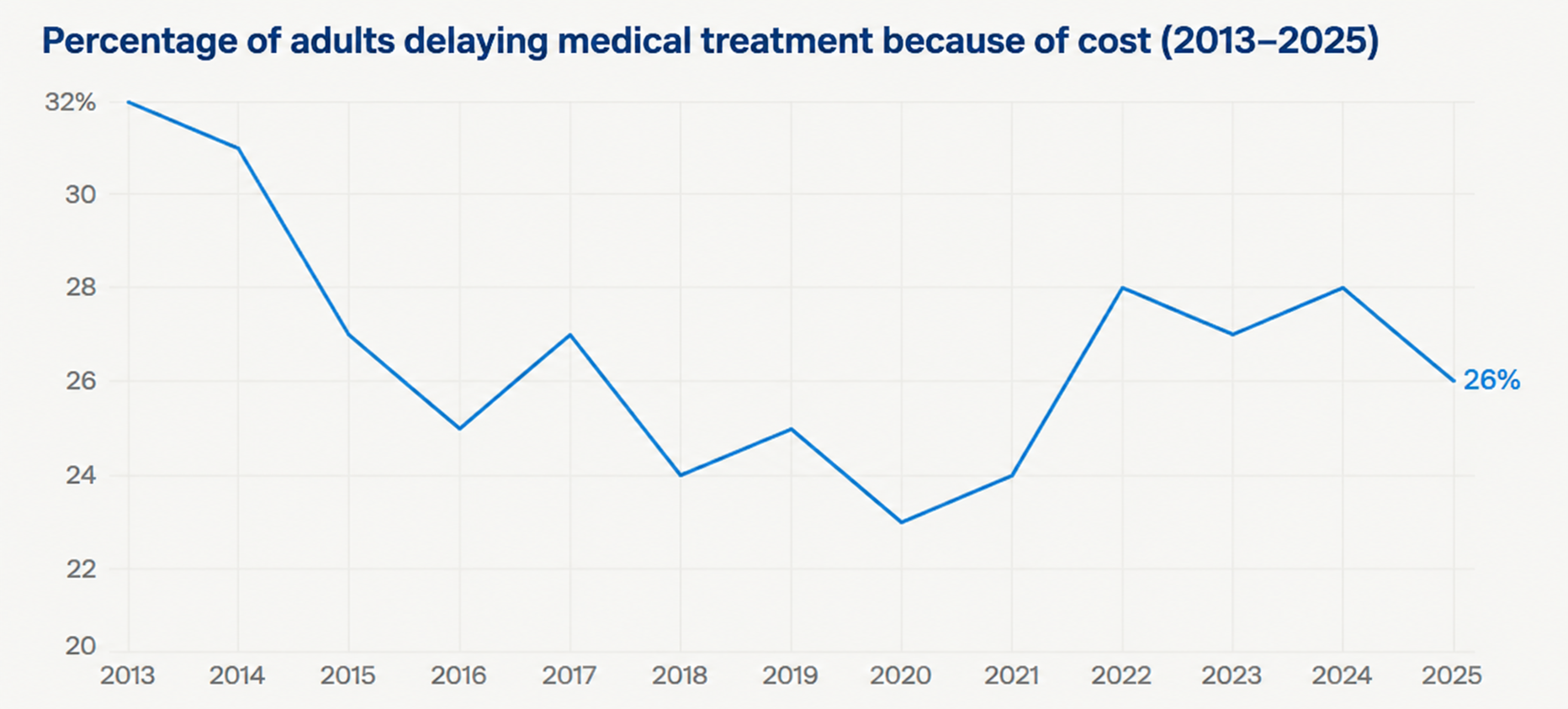
Source: The Federal Reserve
What Are Healthcare Payment Solutions?
Healthcare payment solutions help practices manage payments after a patient receives care. Instead of relying on manual processes and time-consuming follow-ups, these solutions make it easier to collect, track, and manage payments.
Their goal is simple: help patients pay in a way that works for them while helping practices get paid faster and reduce administrative work. With a smoother payment process, healthcare teams can spend less time handling payments and more time focusing on patient care.
How Healthcare Payment Solutions Support Revenue Growth
For healthcare practices, revenue growth is not just about attracting new patients. It is also about making the payment process simple, efficient, and reliable. Here is how this software boosts your revenue:
1. Accelerates Payment Collection
Collecting payments at the point of care can significantly improve revenue cycles. Patient payment solutions make it easier for patients to pay immediately through digital payment options. Therefore, it reduces the need for follow-up billing.
In fact, a TrustCommerce survey found that nearly 80% of U.S. healthcare consumers are comfortable using digital payment methods for healthcare expenses.
2. Reduces Administrative Costs
Payment management involves much more than collecting money. Staff often need to track payment plans, monitor outstanding balances, send reminders, and handle follow-ups. These administrative tasks take valuable time away from patient-facing responsibilities. Research shows that administrative costs make up over 40% of hospital spending. Healthcare payment solutions automate many of these day-to-day tasks, helping practices save time, reduce operational burdens, and improve efficiency. This gives healthcare teams more time to focus on patient care and less time on paperwork.
3. Improves Cash Flow Visibility
Many patients prefer to spread treatment costs over time through payment plans. In these cases, it becomes important for practices to keep track of payments and remaining balances. Healthcare payment solutions help by showing payment activity, payment plans, and outstanding amounts in one place and in real time. As a result, it helps make smarter financial decisions and plan more effectively for the future.
4. Increases Treatment Acceptance
Even when patients understand the importance of a treatment, upfront costs can make them hesitant to move forward. By providing financing options, practices can make healthcare expenses easier to manage. As a result, patients are more likely to accept recommended treatments rather than delaying or avoiding care due to financial concerns.
5. Reduces Missed and Late Payments
Late payments can affect cash flow and create extra work for staff. Patient checkout software helps reduce this problem through automated reminders and recurring payment options. These reminders help patients stay on top of their payments while reducing the need for staff to manually follow up on unpaid balances.
Ways Patient Checkout Software Improves the Patient Experience
Patient satisfaction is influenced by more than the quality of care. The payment experience also plays a major role in how patients view a healthcare provider. When payments are simple, transparent, and flexible, patients are more likely to have a positive overall experience.
1. Creates a Convenient Payment Experience
Today's patients expect the same convenience from healthcare payments that they receive from retail, banking, and other service providers. Patient checkout software supports multiple payment methods, including credit cards, debit cards, ACH transfers, and digital payment options, making it easier for patients to pay in the way they prefer. Many platforms also offer mobile-friendly payment experiences, allowing patients to review balances and make payments from their smartphones or computers.
2. Offers Greater Financial Flexibility
Unexpected medical expenses can place a heavy financial burden on patients. That’s where healthcare payment solutions help reduce this stress by offering financing options. Instead of paying the full amount upfront, patients can choose plans that fit their budget. This makes treatment more accessible and reduces financial hesitation.
Research from PYMNTS shows that patients are more likely to move forward with care when flexible payment options are available.
3. Reduces Billing Confusion
Healthcare billing can often be complex, especially when insurance, copays, deductibles, and out-of-pocket expenses are involved. Confusing bills can lead to frustration, delayed payments, and increased calls to the practice. Patient checkout software helps simplify the process by providing clear payment schedules, easy-to-understand invoices, and digital payment records. Patients can easily see what they owe, when payments are due, and what payments have already been made. This clarity reduces uncertainty and helps patients feel more confident throughout the payment process.
4. Enhances Trust and Transparency
Trust plays a key role in the patient-provider relationship. When patients understand their financial responsibilities upfront, they are less likely to be caught off guard by unexpected bills or costs.
This growing expectation is reflected in research from Experian Health, which found that patients increasingly want accurate cost estimates and greater price transparency before receiving care. Patient checkout software supports this by providing clear payment information, financing details, and real-time access to account balances. Patients know exactly what they owe and can review their payment information whenever they need, creating a more transparent and trustworthy financial experience.
5. Supports a Seamless Patient Journey
The patient experience does not end when treatment is completed. The transition from care to payment should be just as smooth as the clinical experience itself.
Healthcare payment solutions create a seamless journey by connecting treatment completion, payment collection, financing options, and follow-up communications into a single process. Additionally, automated reminders and payment updates help patients stay informed without requiring manual follow-up from staff.
Core Features Every Healthcare Payment Solution Should Offer
Not all patient checkout solutions offer the same capabilities. Therefore, check for the following features before deciding:
1. Automated Payment Reminders
Following up on unpaid balances manually can take significant time and resources. Automated payment reminders help practices keep payments on track by sending timely notifications through email, text messages, or other communication channels. These reminders reduce the likelihood of missed payments while improving the patient experience through consistent and professional communication.
2. Financing Options
Healthcare costs can be a barrier for many patients, especially when unexpected expenses arise. Solutions that support installment plans and patient financing give patients more ways to manage costs without delaying care. By offering financing solutions, practices can improve treatment acceptance while helping patients access the care they need.
3. Secure Payment Processing
According to the American Hospital Association, cybersecurity and data protection remain top priorities for healthcare organizations as digital payment adoption continues to grow. Therefore, look for software that supports PCI-compliant payment processing, data encryption, and secure transaction handling. Strong security measures help reduce risk while demonstrating a commitment to patient privacy and trust.
4. Real-Time Reporting and Analytics
Visibility into payment performance is critical for making informed business decisions. Real-time reporting allows practices to monitor payment activity, track outstanding balances, identify trends, and evaluate financial performance. Healthcare organizations are increasingly investing in analytics tools as well.
5. Multi-Channel Payment Collection
The best healthcare patient solution supports payment collection across multiple channels, including in-office payments, online portals, mobile devices, email payment links, and text-to-pay options. This flexibility allows patients to choose the payment method that is most convenient for them, helping improve both satisfaction and collection rates.
FinanceMutual™: The Complete Healthcare Payment Solution
The future of healthcare payments isn't just about collecting payments. It's about creating payment experiences that work for both patients and practices.
FinanceMutual™ helps healthcare organizations do exactly that. Practices can build personalized checkout experiences and share them through multiple channels, including email, SMS, QR codes, and direct links. Patients gain the flexibility to choose payment pathways that align with their financial situation, making it easier to move forward with care. Meanwhile, practices can automate collections, monitor payments, and better understand patient payment behavior through actionable insights.
All in all, whether you're searching for patient checkout software or a healthcare checkout builder, FinanceMutual™ brings everything together in a single, easy-to-use solution.
The Final Words
The way patients pay for healthcare is changing faster than ever. As expectations around convenience and flexibility continue to rise, practices face increasing pressure to modernize their payment processes.
Healthcare payment solutions make this transition easier. They help practices streamline collections, improve patient satisfaction, and reduce administrative burden, all while supporting healthier revenue growth. More importantly, they enable practices to keep up with changing patient expectations and deliver a payment experience that feels simple and accessible.
FAQs
1. Does a Payment Processing Provider Need To Be HIPAA-Compliant?
Yes, if the provider handles protected health information (PHI), it must be HIPAA-compliant and sign a Business Associate Agreement (BAA). This ensures patient data is securely processed and protected.
2. What Are the Best Payment Processing Solutions?
The best solutions are those designed for healthcare, offering secure payments, insurance integration, and flexible patient billing. Examples include systems with HIPAA-ready infrastructure and automation features.
3. How Do Healthcare Payment Processors Work?
Healthcare payment processors connect patients, providers, and insurers in one system. They handle billing, payment plans, and transaction tracking while ensuring data security and compliance.